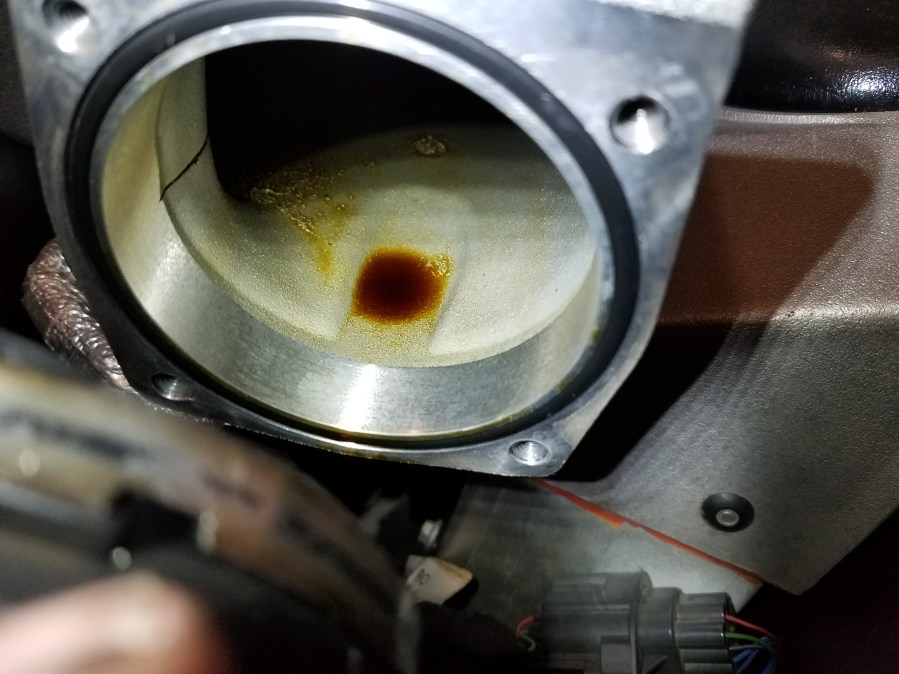
If your DB9 needs it’s Positive Crankcase Ventilation (PCV) Valves replaced due to oil buildup in the Intake Manifolds (see my full article on this) then you need to track down the right parts to get it serviced – and that’s what this article is all about.
My enthusiasm for the task led me into trouble (and I can save you from the same mistake if you read through this article). I wasn’t sure what parts a dealer would normally replace to deal with the oil build up, so I asked the parts manager Rob Sims at HMV England whom I was dealing with. He promptly sent me the parts diagram, and a list of bits he said they typically serviced. What I failed to consider was ‘context’, the dealer may be rebuilding an engine and PCV system outside the car, and I was just a newbie trying to do this under the hood on a weekend. Continue reading “Parts Needed to Change the PCV Valves on an Aston Martin DB9”→
The notion of owning an Aston Martin DB9 is tempting. The allure of the curves, the power, the feel. You become infected wondering what would it be like. I’m a life long car guy and I’ve reached 50 years old and can finally indulge a bit. [Insert mid-life crisis jokes here – but I love my Sweetie of 27 years and still have all my hair – life is good] I can’t afford to go drop $250K on a new DB11, but I can generally afford a new luxury or sports car. I’d been carefully watching the used market prices on early DB9 models dropping for a few years until I finally succumbed back in 2013.
If you have or are about to take the plunge, you will (or should) inevitably be thinking:
Can I afford this car after I purchased it?
That’s a good question to ask before you commit, particularly if you stretch to just barely manage the purchase. Is it myth or truth that it takes a fortune to run a car like this? After living with mine for three years now, I can share the naked truth with you. Continue reading “The True Costs of Owning an Aston Martin DB9”→
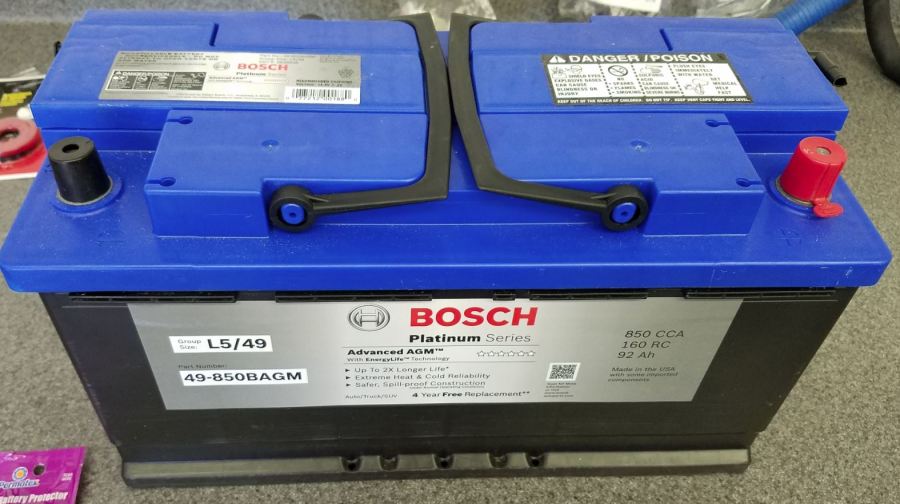
Eventually you have to service the battery in your DB9. They just don’t last forever – and the typical lifespan of a traditional flooded lead acid battery (like the ones originally fitted) is about 5 years. The good news is that when the time comes to replace your battery you’ll be well equipped to know how and avoid a potentially costly trip to the dealership.
My baby left me stranded. I use my DB9 as my daily driver, and I was out on an errand run – ATM then Dry Cleaning then Lunch – all close together. After the dry cleaning stop I went to start her, and rather than the glorious roar to life, all I got was “Ruh – ruh – click”. Crap – stranded in the local strip mall parking lot amongst all the Fords and Toyotas – all that start. My pride was suffering. Dead Battery. Fortunately my neighbor Rob and his Subaru came to the rescue and gave me a boost.
Of course, there are a myriad of reasons for a dead battery – leaving the lights on, failing alternator, etc. Mine was simpler. Batteries don’t last forever. A typical lead acid battery (like those originally fitted to a DB9) have a life span of about 5 years under normal regular use. I had no idea if the battery fitted to my car was the original (since I am not the first owner and have little service history), but as I discovered it was the original, and that meant it was 11 years old! Wow! California living.
One day you’ll get into your DB9 and just after “Power Beauty Soul” you’ll be greeted with “Time for Regular Service”. The DB9 has a scheduled maintenance due every 1 year or 10,000 miles (whichever comes first). I don’t know exactly how it keeps track of the time (maybe via the GPS providing it the date), but mine recently went off on what was nearly the exact anniversary date from the previous year (I had only driven about 5,000 miles in the 12 months, so it wasn’t the miles driven that tripped it).
The Side Repeater Lights on my DB9 have discolored to a Yellow’ish from the UV in the harsh California sunlight. I know, this concept is completely unfathomable to my readers in the UK, and probably a design issue the factory never considered – “Sunlight? Bahh – just make it waterproof you twit – this is England”. When I purchased my car from the DPO (Damn Previous Owner) it had the issue quite notably on just the left hand side assembly. I can presume he parked the car during the day with that side facing South.
The side repeater light is a turn indicator light mounted on the side of each front fender/wing. When new, the plastic assembly is a clear lens with some white. As you can see in this photo, the old one has got that ugly faded yellow plastic color compared to the bright, fresh and clean look of the new one. Continue reading “Replacing the Side Repeater Light Assembly on an Aston Martin DB9”→







 Aston 1936