If you are about to embark on changing the coil packs, spark plugs and perhaps the PCV valves on your DB9, it’s always comforting to know you have all the tools to do the job BEFORE you start. It’s really frustrating to be halfway into a task and find out you are stuck since you don’t have the right do-dad. The DB9 isn’t quite as simple as changing the plugs and coil on an old Chevy small block V8, and you’ll be twisting the spanners for hours just to get near the plugs and coils. Continue reading “Tools Required to Change the Coil Packs and Spark Plugs on an Aston Martin DB9”→
If you have a lumpy idle with your DB9 (like mine was as detailed in this blog post) or are just doing a scheduled service that requires changing the plugs, it will be helpful to know all the parts you’ll need. Of course, you’re sitting there going ‘Duh – I need spark plugs to change spark plugs you idiot’. Yes, that’s true, but you also need a small assortment of other bits and bobs to put it all back together Properly. Continue reading “Parts Needed to Change the Coil Packs and Spark Plugs in an Aston Martin DB9”→
When I purchased my DB9 a few years ago occasionally if I just sat still in the car while it was idling I could hear – no – feel in the seat of my pants – the slightest ‘lump’ in the idle. Rarely, faintly, distantly, so infrequently that I never really worried about it that much. At the time the car was 8 years old and had about 15K miles on it.
Turn the clock ahead about 2 years to spring 2016 (and about 25K miles total now) and the faint lump rather quickly progressed to a routine ‘lump’ at idle anytime in gear when stopped at a light or sitting in the garage. The lump was only at idle, and seemed to be gone (or at least was not perceivable) at speeds above 900 RPM. I started to learn more about lumpy idles (or misfires at idle) on the forums. Continue reading “Lumpy Idle / Misfire on an Aston Martin DB9”→
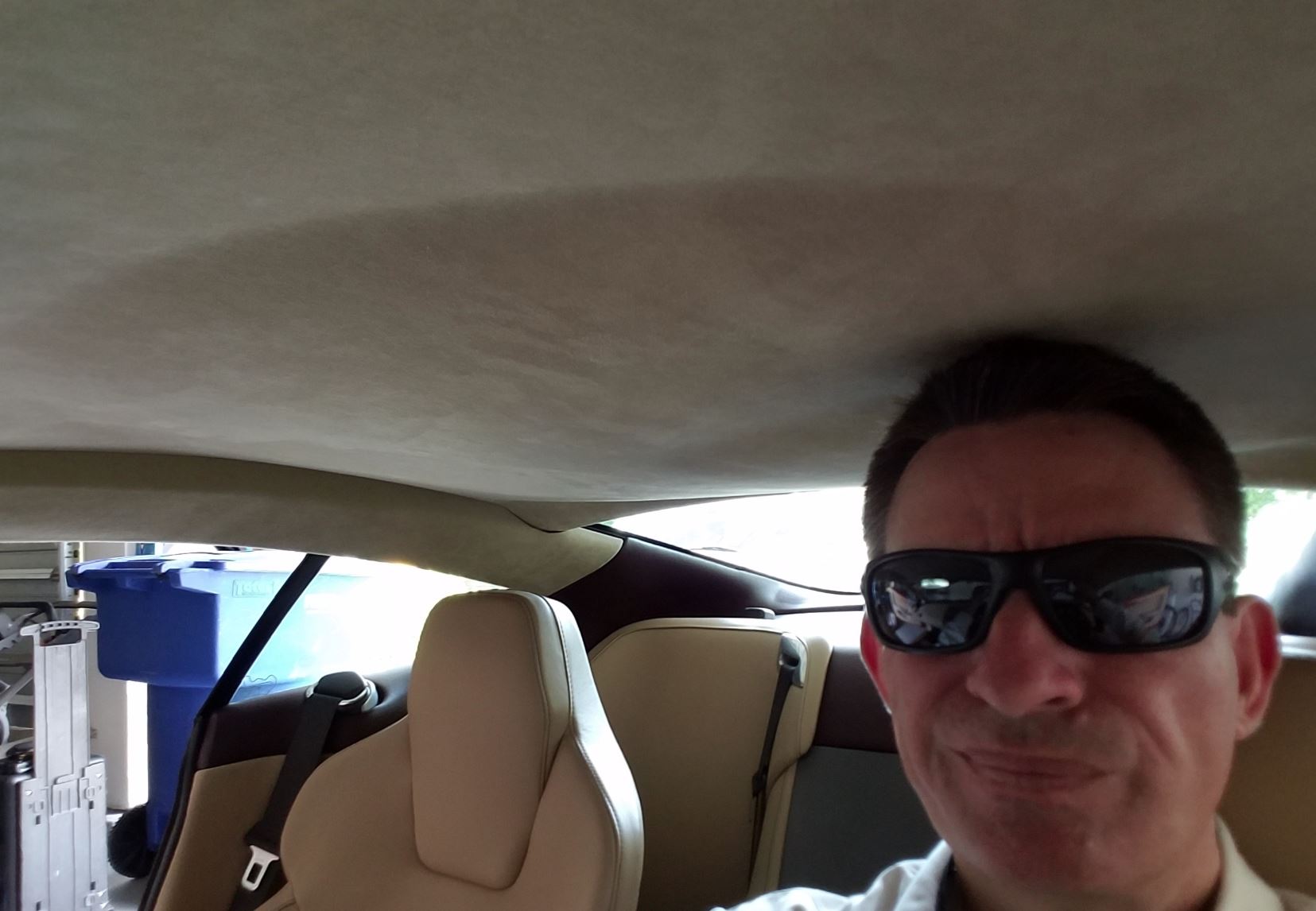
Arrrgggh! You may be wondering – “Hey, where are those articles on changing the Coil packs?” Well, I’ve been distracted by a new issue – the headliner in my DB9 let go and is sagging on my head. Not something you can really ignore, each time you get in to drive it sits like a cap on your head. Only got 10 days of driving bliss (after the Coil Packs change). Frustrating. In its defense, it was 103°F outside the day it went, and heat certainly speeds the deterioration of the glue.
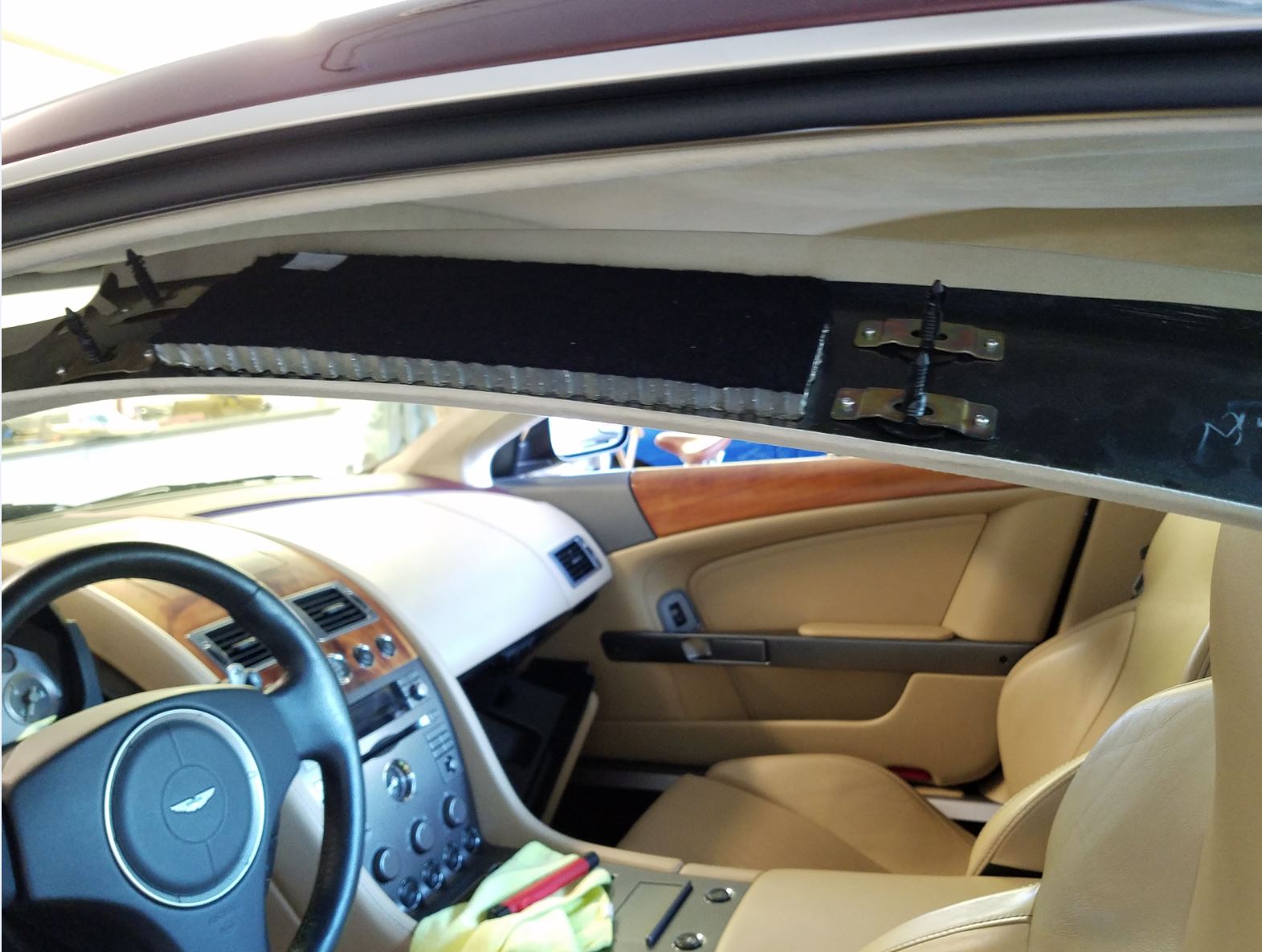
Pulling apart the interior trim
I don’t have a main dealer in the city where I live, so I’ve made a few calls (to the local Maserati and Rolls dealers) and they both suggested the same interiors shop. Spent this weekend learning how to remove the headliner from my car, along with how to remove all the Instrument panels (which the books and blogs talk about removing to get the A-pillar trim off). Basically, ripped my interior apart. I must be crazy.
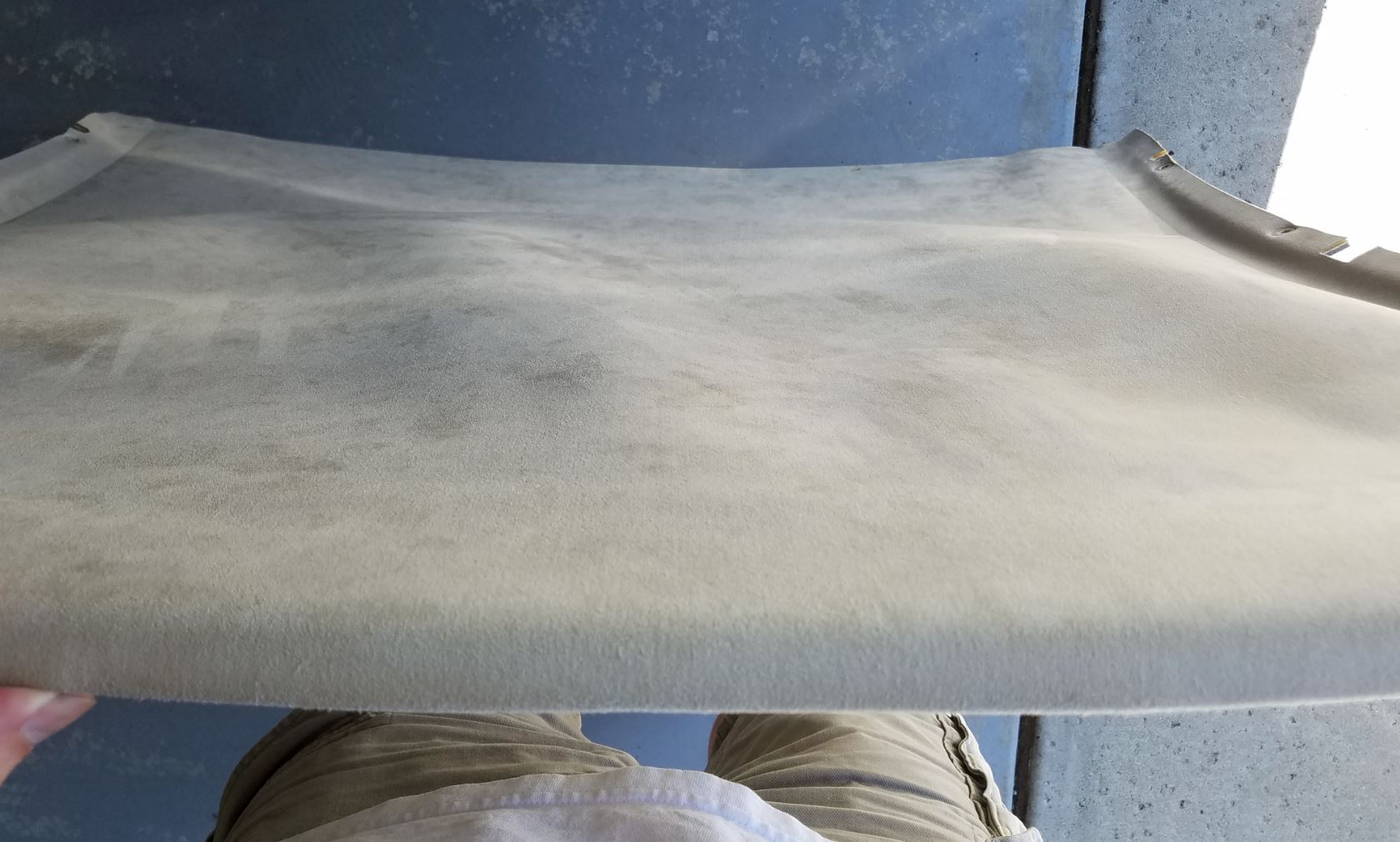
Headliner Removed
Anyways, headliner is removed and will be off to the interior shop in the morning, and hopefully will have it back together in a few weeks (I have some travel for work coming up). Sorry for the delay on the Coil Packs articles, but now I have material for articles to post for the rest of the year. [Updated Oct 2017 – You can now read and see the entire headliner series here]
Oh yeah, and I think my Battery is getting weak, and I bet that goes soon too. Rrrrrrr. I love my car – I love my car – I love my car…..
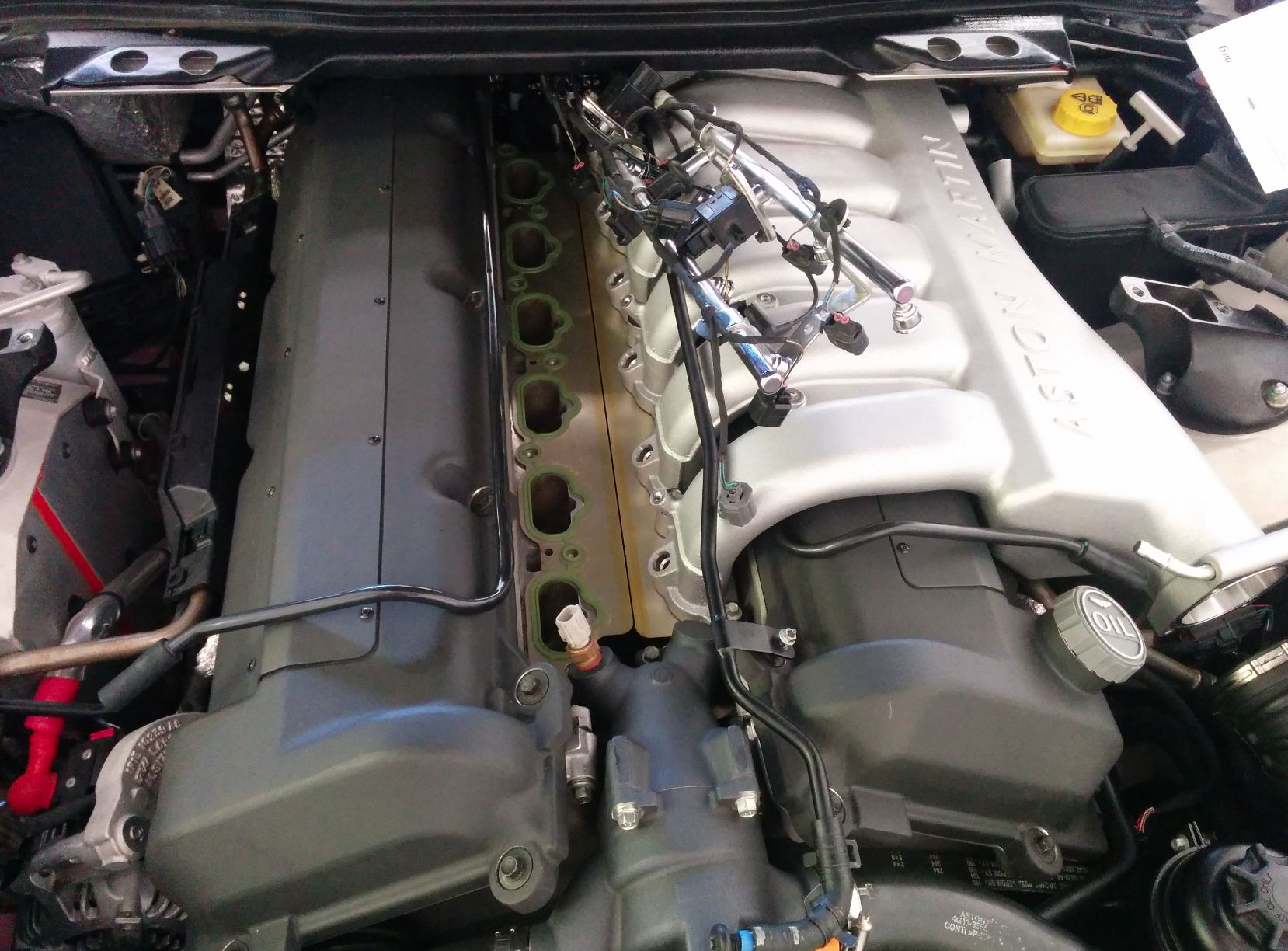
Coil Packs changed and putting the Inlet Manifolds back on.
Just a quick update for those of you interested. I’ve just spent the last three days changing out my Coil Packs, Spark Plugs and PCV system. Fired the wee beasty up at 5pm today (July 4th holiday here in America). Idling smooth as silk now.
In the coming weeks I will be posting articles with detailed how-to’s as well as video’s of each step of the process. I used a lot of information from the forums to prepare myself, and it went mostly according to plan. I will share what I learned so it may help the rest of you in your own projects.
Been travelling (with work for about 8 weeks now) and looking forward to getting back to home and some R&R time (which for me means fiddling with something on the DB9).
I’ve had a lumpy misfire at idle since I purchased the car, but it used to be very, very minor. A few months back it started to become much more noticeable and it’s time to deal with it.
Avid readers of the blog may have figured out I was heading in this direction already by my posts about the OBDII reader and finding information about misfires, etc. What’s I’ve learned with my car is that I have 2 cylinders misfiring substantially. I have also been doing my research about previous service history (which you can see in the My Car section of the blog) and I learned that the DPO (damn previous owner) serviced just ONE of the coil packs prior to selling me the car, and the dealer had a footnote about other cylinders showing misfires, but they deemed it not worth the expense to fix it then. So now its my problem.
A lumpy idle / misfire is a common problem with early DB9’s and is an issue with weak coil packs. I think I’ve heard people say that if your car is over 10yrs old or 20K miles or more, the issue will appear. It’s even mentioned as typical issue by Grant Neal in his excellent book The Definitive Guide to the new Gaydon era Aston Martin – A Buyer’s Guide and Car Enthusiast’s Guide (check out my blog article on this book)
This July 4th long weekend I am all set to change all 12 coil packs and spark plugs. Parts ordered and arrived. Process researched and vague ideas in place. Special tools ordered and delivered. GoPro charged and ready!
Over the next several weeks I’ll be starting to publish the process in both written blog and video format. As usual I will be breaking it down into bite size chunks matching the sequence of tasks to get it done, usually 2-5 mins of video at a time.
I was trying to learn more about the specifics of my DB9, what options it was ordered with and things like that. When I purchased the car used I got almost no paperwork. The Holy Grail would be an original factory window sticker, original dealer invoice or a factory build sheet. I reached out to my local dealer first, but thought I would try the helpful folks at the Aston Martin Heritage Trust (AMHT) that oversee the records for all the vintage models. Continue reading “Contacting the AMHT for information about your Aston Martin DB9”→
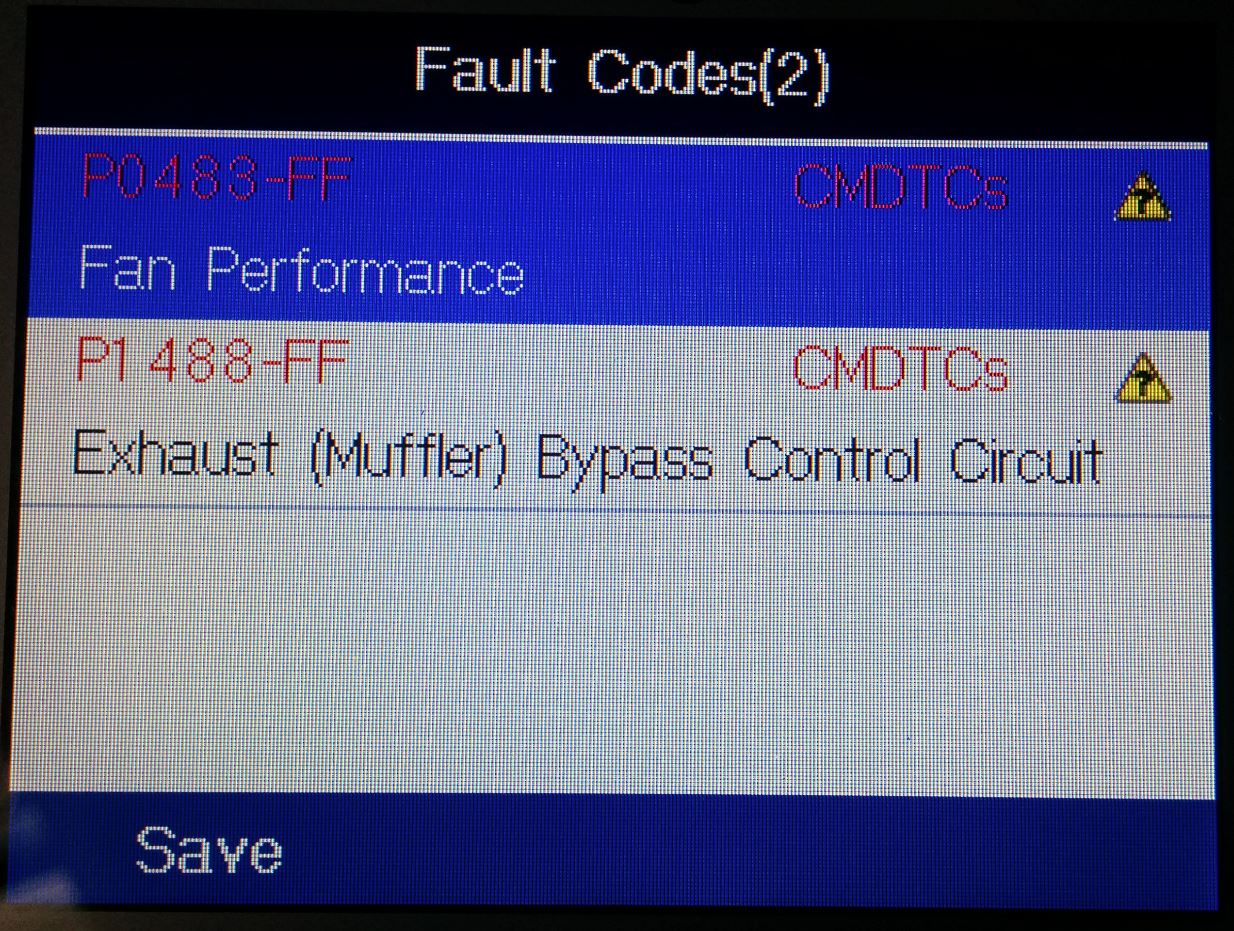
While servicing your DB9 you might run into a situation where your dash display or OBDII reader shows you an error message in the form of a cryptic P code like P1488, setting the stage for an ominous visit to your local dealer and the commensurate drain on your bank account. Without any reference, your tendency might be to stick your head in the sand and just drive on risking damage to the car. In this post I wanted to publish a list of all the P codes I could find so that it might help steer you in the right direction to taking care of the issue yourself.
Some P codes are innocuous. For example, P1488 [Exhaust (muffler) Bypass Control Circuit] is logged if you pull the famous Fuse 22 to uncork your exhaust. The car knows Fuse 22 is pulled, makes a note of it, but doesn’t set off the idiot light (Malfunction Indicator Lamp or MIL). If you find this code and you have pulled your fuse, you can just ignore it.
Aston Martin Diagnostic Manual
Download the Aston Martin OBDII Diagnostic Manual – Preliminary Issue
I have gathered the list below from a preliminary publication of the Aston Martin Factory “OBD II Diagnostic Manual” published in April 2004. The publication is a great resource, and has a tremendous amount of detail about each P Code, and other theory about the cars operation and diagnostics. 356 pages of technical details and some very helpful diagrams. Being that it was a preliminary publication it’s a good starting point for the early cars (MY 04/05/06), but I am certain that as the DB9 was developed more codes were added and this list is incomplete. The official place to get the P codes explained is on the Aston Martin Technical Information Website (which I have covered in another blog post). What I dislike about the format on the website is that the codes aren’t in a single document anymore, but rather each has its own web page section. This makes a lot of sense for Aston Martin (alleviates the need to keep a large complicated document up to date), but for us DIY repair guys without an expensive $2,600 annual subscription to the website it’s a handicap. So, I would recommend that if you find the P code you are experiencing in the list below just check out the PDF. If the P code you have isn’t listed, perhaps spend the $100 for a one day subscription to the website and look up the code you have (and maybe send me the details or your code and a PDF print of what was on the website about it). Or succumb, and take your car into the dealership. Continue reading “OBDII P Codes on an Aston Martin DB9”→
As part of my 2 year/20,000 mile service I was performing on my DB9 it was required to replace the cabin air/pollen filters. I instinctively ordered a set of factory replacement filters, but stumbled across a forum post that suggested that the air filters in our beloved DB9 weren’t bespoke items, and were actually filters designed for a Mazda RX-8 and MPV minivan! Continue reading “A Better Replacement Cabin Air Filter for an Aston Martin DB9”→






 Aston 1936